


October 6, 2026
How to reduce no-shows just when your schedule is at its fullestReminders, cancellation policies, and flexibility: how to prevent no-shows from costing you hours just when your schedule is at its fullest.
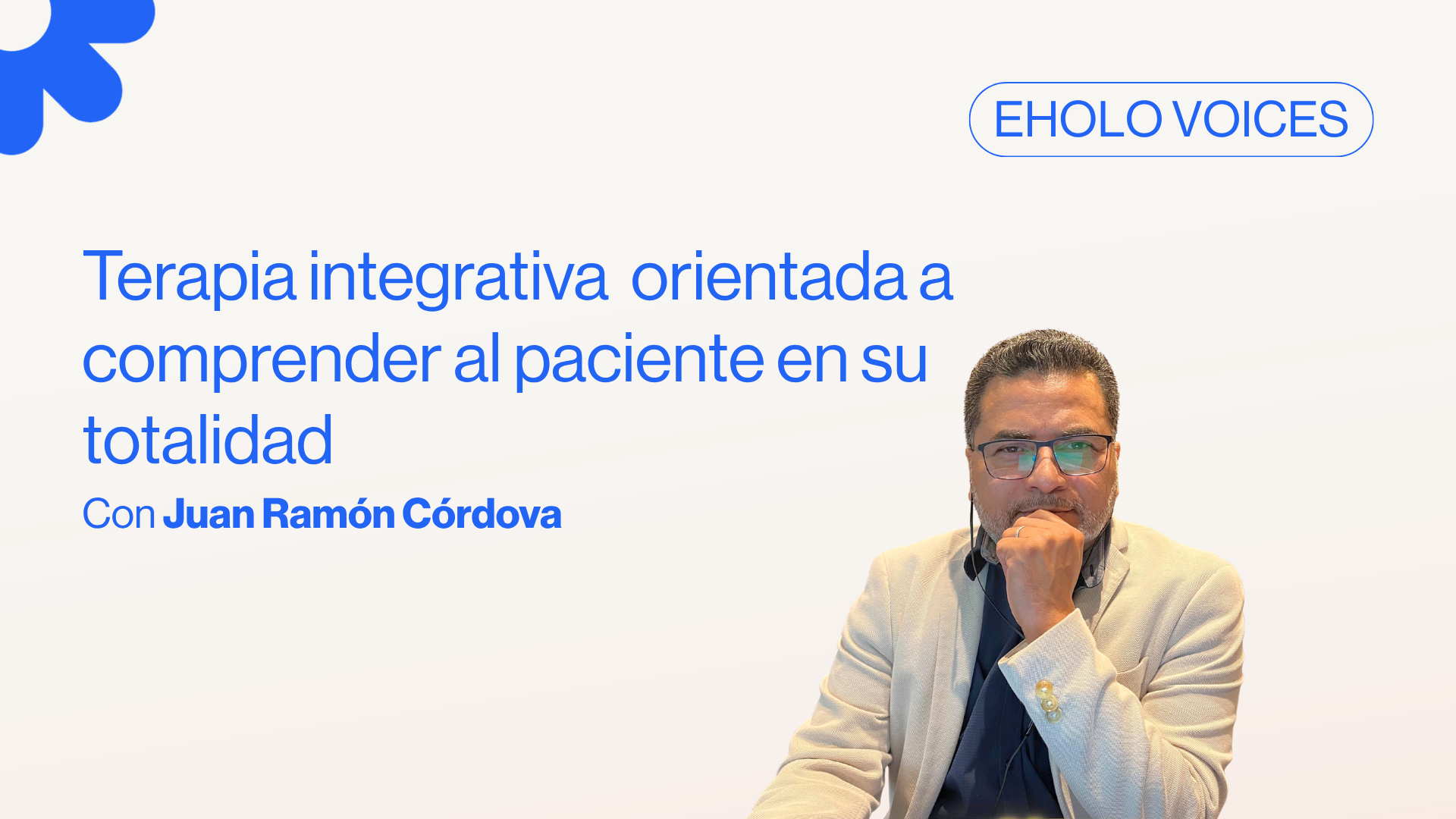
Understanding the Whole Person: Juan Ramón Córdova's Integrative Approach
"My therapeutic approach is integrative and eclectic, aimed at understanding the whole person and, with clinical judgment, utilizing various psychological tools that foster genuine processes of awareness, emotional regulation, and personal change."
Juan Ramón Córdova is a psychotherapist, and his way of working stems from a simple yet uncommon idea: adapting tools to the individual, not the other way around. He doesn't follow a single theoretical model or apply rigid protocols. Instead, he combines various psychological approaches with clinical judgment, tailored to what each process requires, always with the same goal: for the person to gain awareness, learn emotional regulation, and sustain real change in their life.
In this Eholo Voices interview, Juan Ramón shares the most demanding challenge of his career, the moment that gave him the most meaning, and how he envisions the future of the profession.
In this Eholo Voices interview, Juan Ramón shares the most demanding challenge of his career, the moment that gave him the most meaning, and how he envisions the future of the profession.
Juan Ramón's approach doesn't seek to fit a person into a diagnosis, but rather to understand how that specific individual functions: their history, their way of regulating themselves, their resources, and their limits. From this understanding, he selects the tools—from one theoretical framework or another—that can best support the process.
This broad perspective is also what has allowed him to manage some of the most complex therapeutic processes in clinical practice.
That says it all.
One of the most complex challenges Juan Ramón has faced in his clinical practice is supporting patients with borderline personality disorder, a task that requires managing emotional intensity and relational instability throughout long and demanding therapeutic processes.
Tackling it, he explains, has required continuous training, clinical supervision, and, above all, a therapeutic attitude rooted in patience, emotional containment, and very clear therapeutic boundaries.
And during that same period, he discovered something rarely spoken aloud: that simple presence, when someone else needs it, can be the most human and most healing thing a therapist has to offer.
This realization took shape, especially, in supporting grief processes: being present when a person manages to navigate pain, reframe loss, and rebuild their life with new meaning. As Juan Ramón summarizes:
"Psychotherapy doesn't eliminate life's pain, but it does help transform it into growth and understanding."
Juan Ramón defines Eholo with a phrase that speaks volumes about how he understands his own work as a psychologist:
“A space that recognizes the human and professional value of the psychologist.”
For Juan Ramón, the future of psychology isn't about a single direction, but rather the ability to integrate three dimensions often considered separately:
"The future of psychology will be characterized by a greater integration between scientific evidence, the understanding of human experience, and the responsible use of technology."
That same idea extends to how they envision their practice five years from now:
"I envision greater integration between in-person consultations and virtual spaces, allowing me to support therapeutic processes with people from diverse backgrounds."
A clinical practice that doesn't abandon closeness, but opens up to new formats to reach more people, without losing what's essential: the therapeutic bond.
📚 Book that changed their way of thinking — Man's Search for Meaning, by Viktor Frankl. "One of the books that has most influenced my understanding of life and human suffering. As a psychologist, it constantly reminds me that therapeutic work not only seeks to alleviate pain, but also to help people discover meaning in what they experience and in what they choose to do with their lives."
🎙 Essential Podcast — Neuroscience outreach platforms. "I'm very interested in listening to neuroscientists and communicators who explain in an accessible way how the brain works: neural networks, brain plasticity, emotional regulation, and the relationship between brain, mind, and behavior. I believe this type of content is very valuable for psychologists because it allows them to understand mental processes from a scientific perspective and connect them with clinical practice."
💭 If I weren't a psychologist… — "I would be a missionary, supporting pastoral processes for young people and working as a youth advisor."
💬 Life-changing quote — "Son, ask the one who knows."
🍽 Dream dinner — "With Dr. Mario Alonso Puig."
✨ Professional role models — Antonio Damasio, because his research has scientifically demonstrated the profound connection between emotions, the brain, and decision-making, providing a more complete understanding of human behavior and the central role of emotions in mental life.

Explora las últimas novedades
Reminders, cancellation policies, and flexibility: how to prevent no-shows from costing you hours just when your schedule is at its fullest.
Has your psychology practice grown? Discover the difference between multi-user and single-user software and what to look for before choosing.
Discover which tasks to automate in your practice and which ones should remain yours.


.webp)
.webp)
.webp)
.webp)
Virginia Lagartos Lopez
April 12, 2024
.webp)
Maria De Salazar Martínez
September 01, 2023
.webp)
April 2, 2024
.webp)
April 3, 2024
.webp)
January 22, 2025
Más de 10,000 psicólogos ya confían en Eholo para gestionar sus consultas.
.png)
Necesitamos saber esta información para personalizar tu demo:
